
The World Bank has approved loans totalling $1.75 billion (about Rs 13,834.54 crore) to fund India's PM Ayushman Bharat scheme and private investment to boost the economic growth. Of the total loan, $1 billion will go towards the health sector, while the rest $750 million will be in the form of development policy loan (DPL) to fill the financing gaps through private sector investment in the economy. The World Bank Board of Executive Directors approved two complementary loans of $500 million each to support and enhance India's health sector.

What do we need more of: Leaders who dominate global institutions or local leaders with a 'Make-in- India' mindset?

This is the highest closing for both the indices since May 15.

In his second term in office, UP Chief Minister Yogi Adityanath has retained 34 portfolios.

'Meiteis started feeling insecure stating that the illegal immigrant population is growing in the valley, and that the majority community would become a minority.'

Fund mobilisation by companies through equity and debt routes has dropped 20 per cent in 2022 to nearly Rs 11 lakh crore, as exuberance dwindled this year due to expensive credit avenues and volatile markets. The first half of 2023 could continue to remain challenging. The year 2021 was extraordinary for fundraising from the equity and debt routes, while 2022 has seen a slowdown in capital raising owing to elevated volatility provoked by unprecedented inflation globally and the Russia-Ukraine war.

Rather than a blind reproduction of the government template, a more productive way of enforcing affirmative action in the private sector could be to emulate an American model, suggests Kanika Datta.

Profit-booking by participants in view of the domestic markets' recent record-setting run fuelled the downtrend

Finance Minister Nirmala Sitharaman presented her third Budget on February 1.

The BSE Sensex jumped 70.42 points to end at 34,503.49, while the broader NSE Nifty finished at 10,651.20, up 19 points.

Brand India's societal divisions and distortions have remained as much relevant in 'liberal' America and Europe as it still is in the structurally stratified Indian society of the 21st century, observes N Sathiya Moorthy.

Lawyers say compensation may be an uphill task for investors because of a lack of judicial precedent and broader institutional difficulties.

In the first such collaboration for India, the country's flagship payments platform, the Unified Payments Interface (UPI), and Singapore's PayNow payment system have launched a real-time cross-border payment linkage system. The linkage, which was launched by Prime Minister (PM) Narendra Modi and Singapore's PM Lee Hsien Loong on Tuesday, was kicked off by a live cross-border transaction between Reserve Bank of India Governor Shaktikanta Das and Monetary Authority of Singapore managing director Ravi Menon, using mobile phones.

Financial planners advise against putting capital to work by anticipating what might go up or down.

The Cabinet has cleared a Bill to set up a government-owned development finance institution (DFI) with initial paid-up capital of Rs 20,000 crore so that it can leverage around Rs 3 trillion from the markets in a few years to provide long-term funds to infrastructure projects as well as for development needs of the country. To put it in perspective, Rs 3 trillion constitutes slightly less than 3 per cent of the Rs 111 trillion to be spent on over 7,000 projects in the National Infrastructure Pipeline from 2019-20 to 2024-25. Besides, the government will give Rs 5,000 crore as grant to the institution, Finance Minister Nirmala Sitharaman on Tuesday told the media after the Cabinet meeting.

Strong performance of past IPOs spurred investors' interest, with 87 small and medium enterprises (SMEs) garnering Rs 1,460 crore through initial share-sales in the first nine months of the year. This was way higher than 56 companies that had raised Rs 783 crore through initial public offering (IPO) in the entire 2021, the industry data showed. Further, the remaining part of the year 2022 can see more mature companies accessing the platform.

The Nifty and Sensex traded close to their respective all-time highs.

Be it roads, railways, ports, civil aviation, energy or electricity, the Narendra Modi govt has invigorated all these sectors since it took over, says Arvind Panagariya.

'We believe 2017 could see higher flows from foreign institutions as money comes back to growth markets like India.'
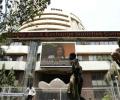
Investment bankers said retail investors were pulling back, while institutions were being pickier

The automobile sector is considered a good indicator of economic health. It has a very long value chain, from primary materials, like metals, glass and plastic, to value-added high-end electronic components, specialised alloys, and software.

'Recent underperformance notwithstanding, equities should constitute a major part of investors' financial portfolio.'

Sun Pharma stole the show in the Sensex pack, spurting 3.91 per cent, followed by M&M at 2.87 per cent.

The vaccination drive was only one important part of India's globally recognised pandemic management and response strategy, observes Dr Vinod K Paul.

Companies from the capital goods space will under-perform.

Coming Wednesday, Finance Minister (FM) Nirmala Sitharaman will present the 2023 Union Budget - the last full Budget ahead of the 2024 Lok Sabha elections. While India exited 2022 as a relatively bright spot in the global economy, the FM will endeavour to present a Budget that insulates India's economy against global headwinds and recession in advanced economies, while sticking to the path of fiscal consolidation. In this, she is being helped by her core team of trusted advisors.

SBI was the top loser in the Sensex pack, shedding around 3 per cent, followed by Kotak Bank, IndusInd Bank, NTPC, ICICI Bank, Axis Bank and HDFC Bank. On the other hand, HUL, ITC, L&T, Bajaj Finserv and Tech Mahindra ended with gains.

Shares of IT companies were in focus with the Nifty IT and S&P BSE IT index gaining more than 2% in an otherwise lower market

Yes Bank was the top gainer in the Sensex pack, surging 3.76 per cent, followed by SBI at 3.18 per cent.
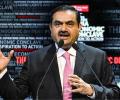
'It's a clear case of political patronage helping an individual grow.'

More than 70 per cent of Indian youth aged between 15 and 29 can't!

Auto and index heavyweights Reliance Industries and ITC were the top losers in early trades.

'India is too large a place to have just 10 labs performing these Covid-19 tests.'

India Inc on Thursday pitched for continuation of reforms while ensuring tax and policy stability in the forthcoming Budget to prop up the economy hit hard by the COVID-19 pandemic. In the virtual pre-Budget consultation held with Finance Minister Nirmala Sitharaman, industry chambers said that government measures will help firmly entrench the nascent signs of recovery being currently seen in private investment. Capital expenditure by the government through enhanced infrastructure spending should in the meantime continue to support growth, CII president TV Narendran said.

For development finance institution to succeed now, the government must stand like a rock behind it and be patient.

'Markets are likely to remain choppy for the next 6 months.'

Park only savings that need not be touched for many years, says Devangshu Datta.

The effect of the HDFC-HDFC?Bank merger will be for the bigger space of the Indian financial sector and not just limited to the banking sector. The large finance companies have practically no benefit of regulatory arbitrage. Earlier, such arbitrage between banks and NBFCs was normal. The logic of the merger is very clear - the cost of borrowing of banks is lower.

The 50-share NSE Nifty was trading lower by 24 points.

The earnings of India Inc hit a record high in the 2022-23 (FY23) January-March quarter (fourth quarter, or Q4), compared with their poor showing in the previous two quarters of the financial year. The rise in earnings, however, is exclusively led by banking, financial services, and insurance (BFSI) companies. A better-than-expected showing by banks and non-bank lenders in Q4FY23 more than compensated for the earnings contraction in the non-BFSI space.
 © 2026 Rediff.com - Advertise with us - Disclaimer - Privacy Policy - Sitemap - Feedback - About us - Terms of use - Grievances